Location >>
 Date:2026-02-25
The global construction industry is standing at a critical crossroads. Historically, the building and construction sector has been responsible for nearly 40 percent of global energy-related carbon emissions, primarily driven by the heavy reliance on carbon-intensive materials like steel and concrete. However, as nations worldwide aggressively pursue ambitious "Net-Zero" emission targets by 2050, architects, developers, and policymakers are rapidly turning to the ultimate sustainable alternative: Mass Timber. According to recent comprehensive industry forecasts, the global mass timber construction market is experiencing explosive growth, projected to expand at a compound annual growth rate (CAGR) of over 13 percent through the end of the decade.
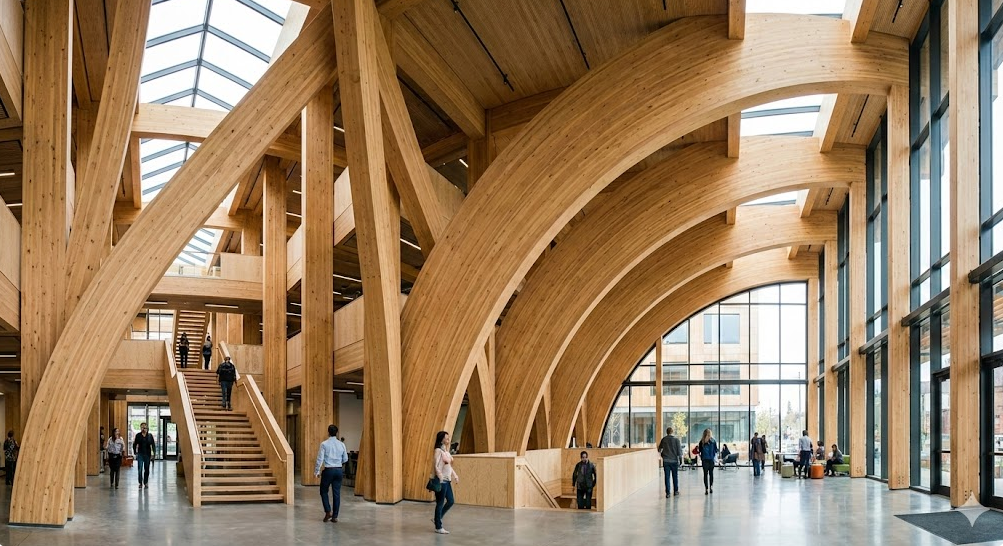
Engineered wood products, such as Cross-Laminated Timber (CLT) and Glue-Laminated Timber (Glulam), are entirely redefining what is possible in modern architecture. Unlike traditional concrete, which emits massive amounts of CO2 during its manufacturing process, mass timber acts as a highly effective carbon sink. Trees naturally absorb carbon dioxide during their growth phase, and this carbon remains safely locked within the timber panels for the entire lifespan of the building. Beyond its unparalleled environmental benefits, mass timber offers exceptional structural strength-to-weight ratios, superior fire resistance properties, and significantly accelerated construction timelines due to precision factory prefabrication.
As the demand for low-carbon building materials surges across North America, Europe, and the Middle East, the Asian manufacturing sector has rapidly positioned itself as a crucial node in the global timber supply chain. For international developers, landscape architects, and urban planners, successfully navigating this green transition requires identifying reliable supply networks capable of delivering high-quality, certified engineered wood. The ability to source these sustainable materials efficiently will not only determine the profitability and compliance of future construction projects but also dictate the entire industry's success in achieving a truly carbon-neutral built environment.